Halal & Vegetarian Search Popularity - UK
10 July 2026
Summary
This report uses the rich and fine-grained data publicly available on Google Trends to estimate change in popularity for vegetarians and Muslims in the UK over the last 16 years. This verifies the methodology previously used for estimating the vegan popularity. As a proxy for searches by Muslims, searches with "halal" are used, and simply terms with "vegetarian" to proxy vegetarians. General keyword popularity is controlled for which filters out both short and long term trends unrelated to the group assessed. Searches with "halal" grew 2.6x faster that their controls from Jan 2010 to Apr 2026. This is roughly in line with the census results from 2011 and 2021, and ONS estimate from 2019 in the number of Muslims, though showing a slightly steeper growth. Searches with "vegetarian" grew relative to their controls from 2010 to 2019 by 1.8x, then dropped suddenly during the first months of 2020, and steadily decreased to 2010 levels by 2026.
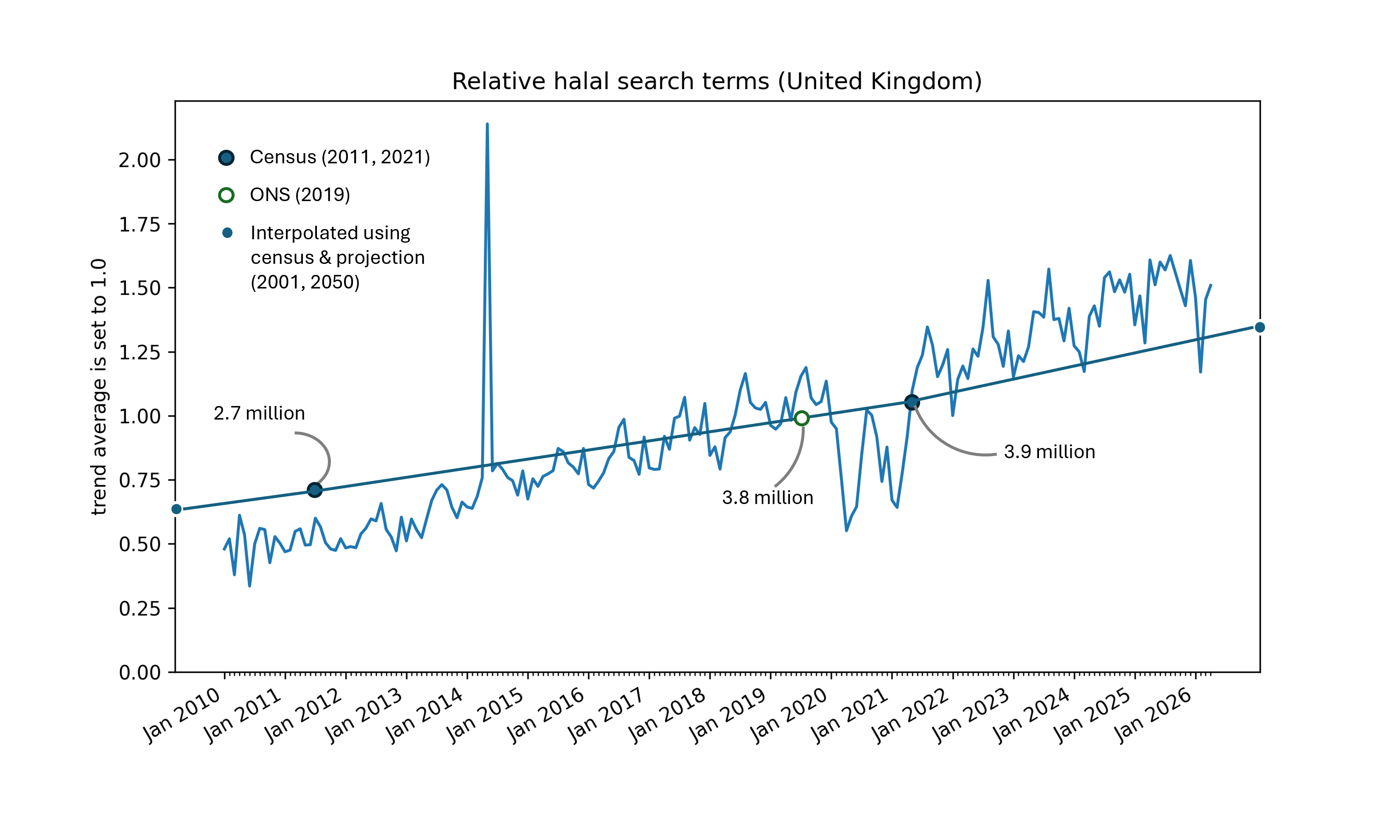 Figure 1. The averaged results of all halal search terms controlled for by their general search term in the UK, and the growth of the number of Muslims according to its census.
Method
Searches for terms like "restaurant" can be modified by adding the word "halal" in front of it, i.e. "halal restaurant". This gives a pair of search terms that are fed into Google Trends (GT), for 1 Jan 2010 to 30 Apr 2026. Certain terms may become more or less popular over time. Using a pair allows us to control for any such changes over time, under the assumption that the version with "halal" in front of it has a similar popularity change. Multiple terms are used in this way and normalised to get an averaged result, after filtering out terms with not enough data points. For the full method, see the method of the earlier report.
Halal Searches
Searches prefixed with "halal" show a roughly linear increase compared to their controls, in line with census data. There are two anomalies to this this. First, one major and short-lived peak in 2014. This appears to be caused by media attention following from an initial article in The Sun. This covers Pizza Express selling only halal chicken while not labelling this clearly as such [1]. Specifically "halal meat", "halal pizza", and "halal chicken" contribute to this peak.
Second, a dip in the data is seen from early 2020 to mid 2021. This period overlaps with the Covid pandemic, and corresponding restrictions. Both divergences of the linear trend are likely a reflection of different search behaviour, rather than changes in the number of Muslims.
The general trend that remains is that is a steady, close to linear growth of 2.6x from Jan 2010 to Apr 2026. This trend is consistent with the census data on the number of Muslims in the UK, though it overestimates the growth over the whole period. Interpolating from the 2001 census and the 2031 projection, the census gives a growth of 2.1x in the same time. Restricting the time to 2011 to 2021 avoids interpolating, for this period the halal search terms analysis gives a growth of 1.6x, where the census tracks a growth in the number of Muslims from 2.7 to 3.9 million, a 1.4x fold increase.[2][3][4][5]
The gap in growth rates between the analysis and the census data could be explained if Muslims change their search behaviour at a different pace compared to the rest of the population. Google itself could have become more popular in this group. Food related searches in particular may have become more popular amongst Muslims (non-dietary searches, such as "halal mortgage" were retrieved but did not have sufficient data points to be included). Finally, demographic changes could have a large impact, as limited English proficiency is rare in younger Muslims as well as Muslims who were young 16 years ago, only those using English for their Google searches are measured in this analysis.
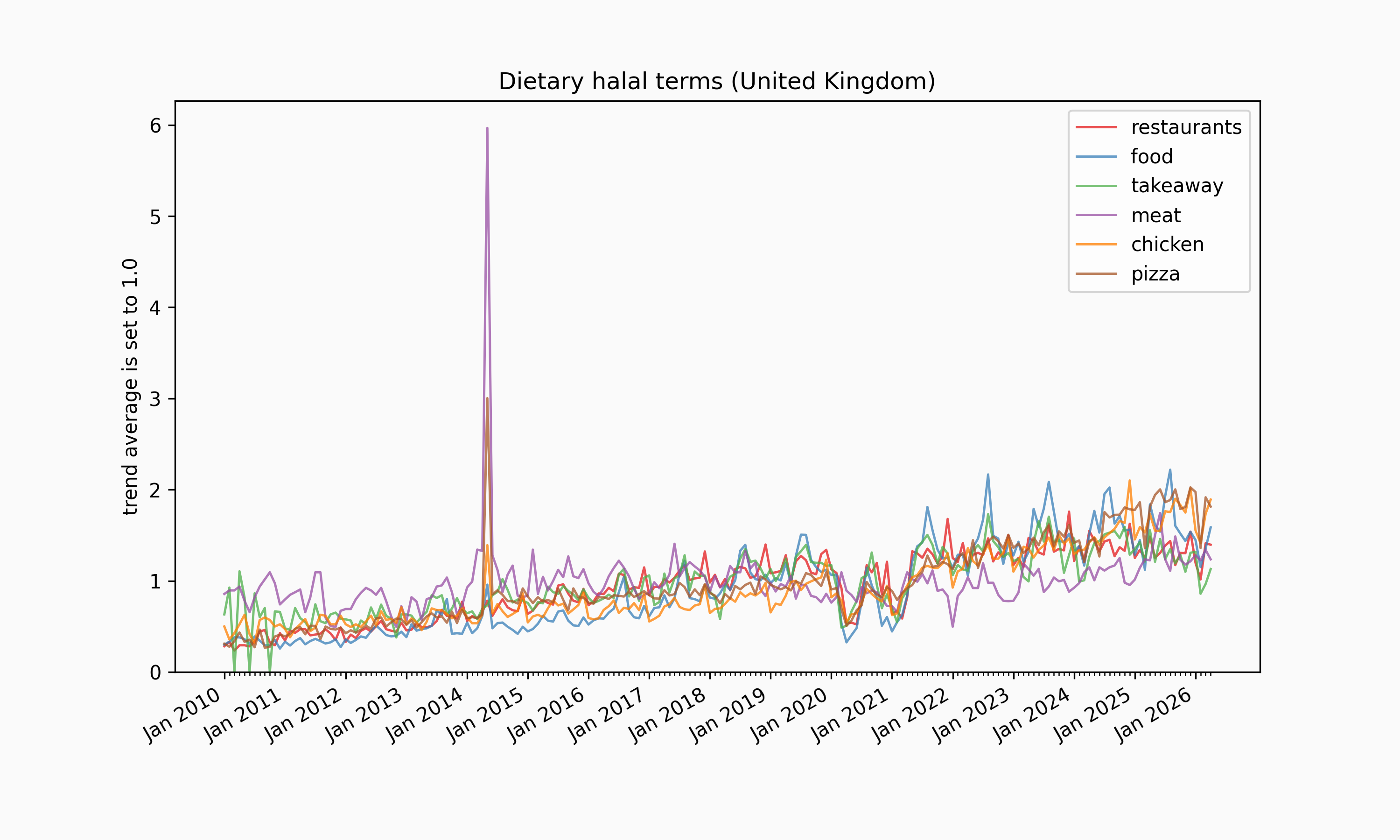 Figure 2. The specific search terms used. All are prefixed with "halal", divided by the root search term, and normalised to average 1.
Vegetarian Searches
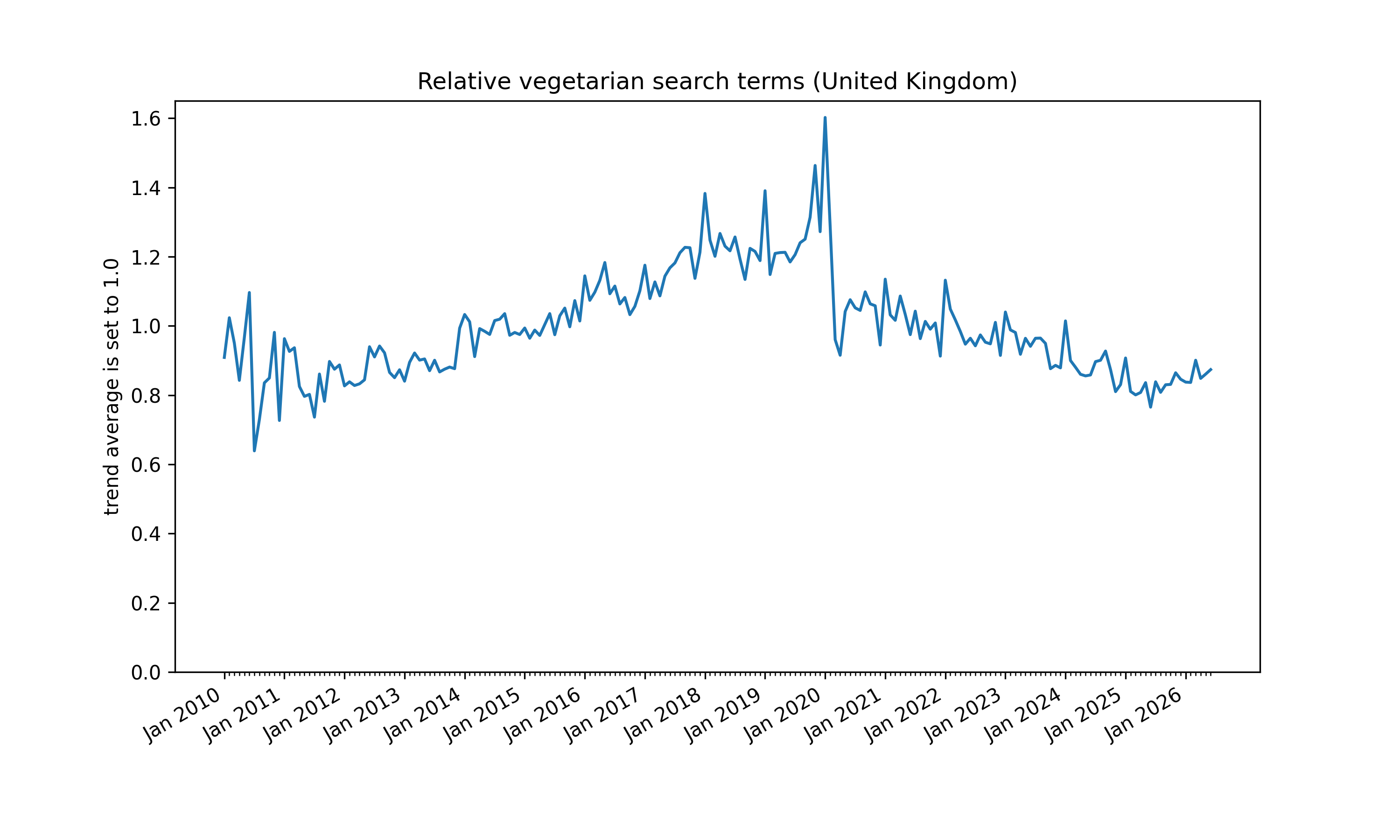 Figure 3. The averaged results of all vegetarian search terms controlled for by their general search term in the UK.
Searches prefixed with "vegetarian" initially rose in popularity compared to their roots. From 2014 to the end of 2019 these increased by 1.7x. However, at the start of 2020, and the start of the Covid pandemic, the number of searches fell dramatically. The trend does not generally recover and continues downward albeit very slowly. The one term that clearly recovers and drops the most is "vegetarian restaurant". The general decline stabilises mid 2025 at the level of 2012, and shows signs of tentative growth since then.
The 2019 peak followed by a rapid decline is mirroring a similar trend seen for dietary "vegan" search terms [6]. The growth of vegetarians up to 2019 is captured by an artifice in the Lancet Planetary Health, which recorded vegetarians to be 2.5% of the population in 2009/10 and 4.5 in 2018/19 [7]. However, YouGov's bi-annual tracker track the number of self-reported vegetarians to be more or less constant from mid 2019 to 2026, at 5% of the population.
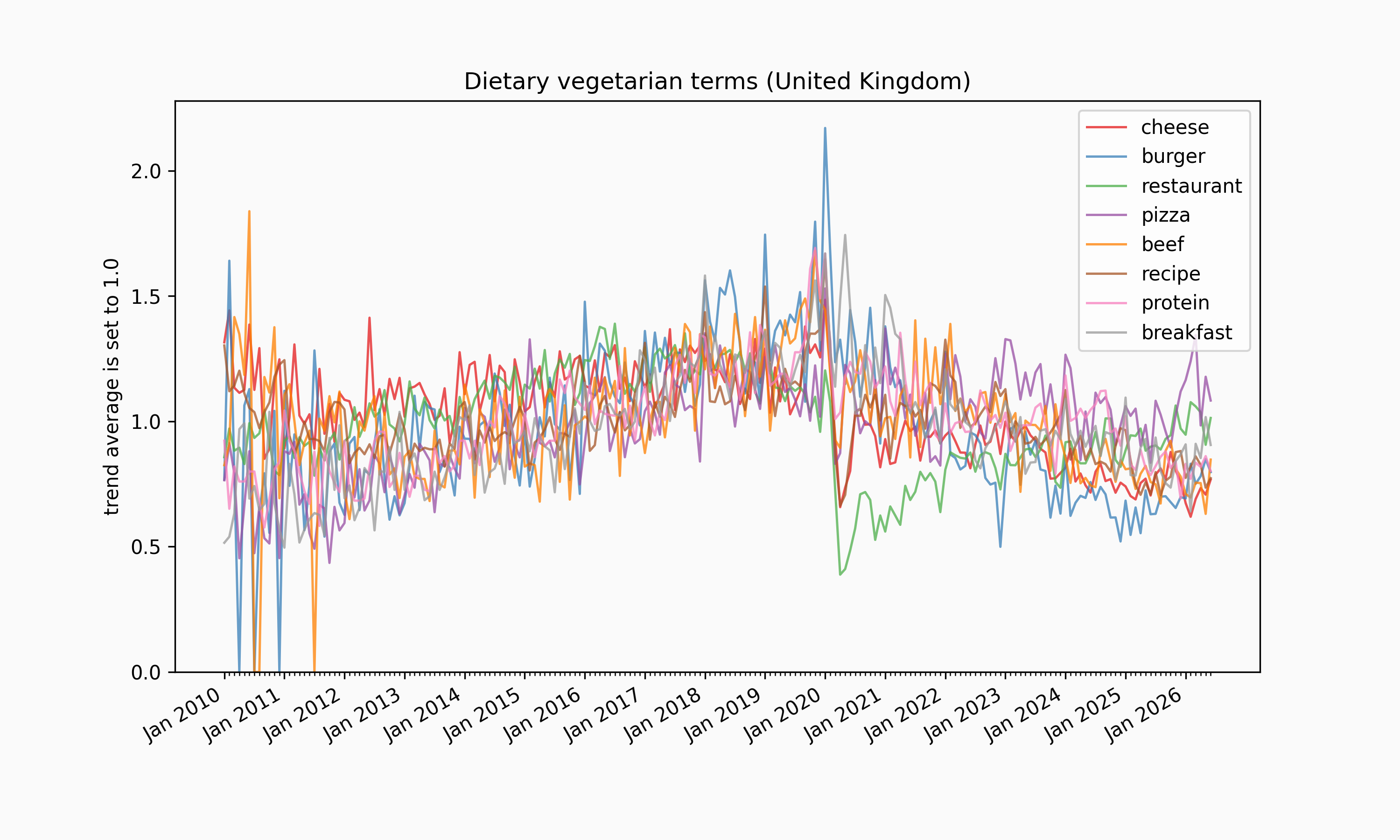 Figure 3. The averaged results of all vegetarian search terms controlled for by their general search term in the UK.