

Impact of Different Fabrics
Global warming impact
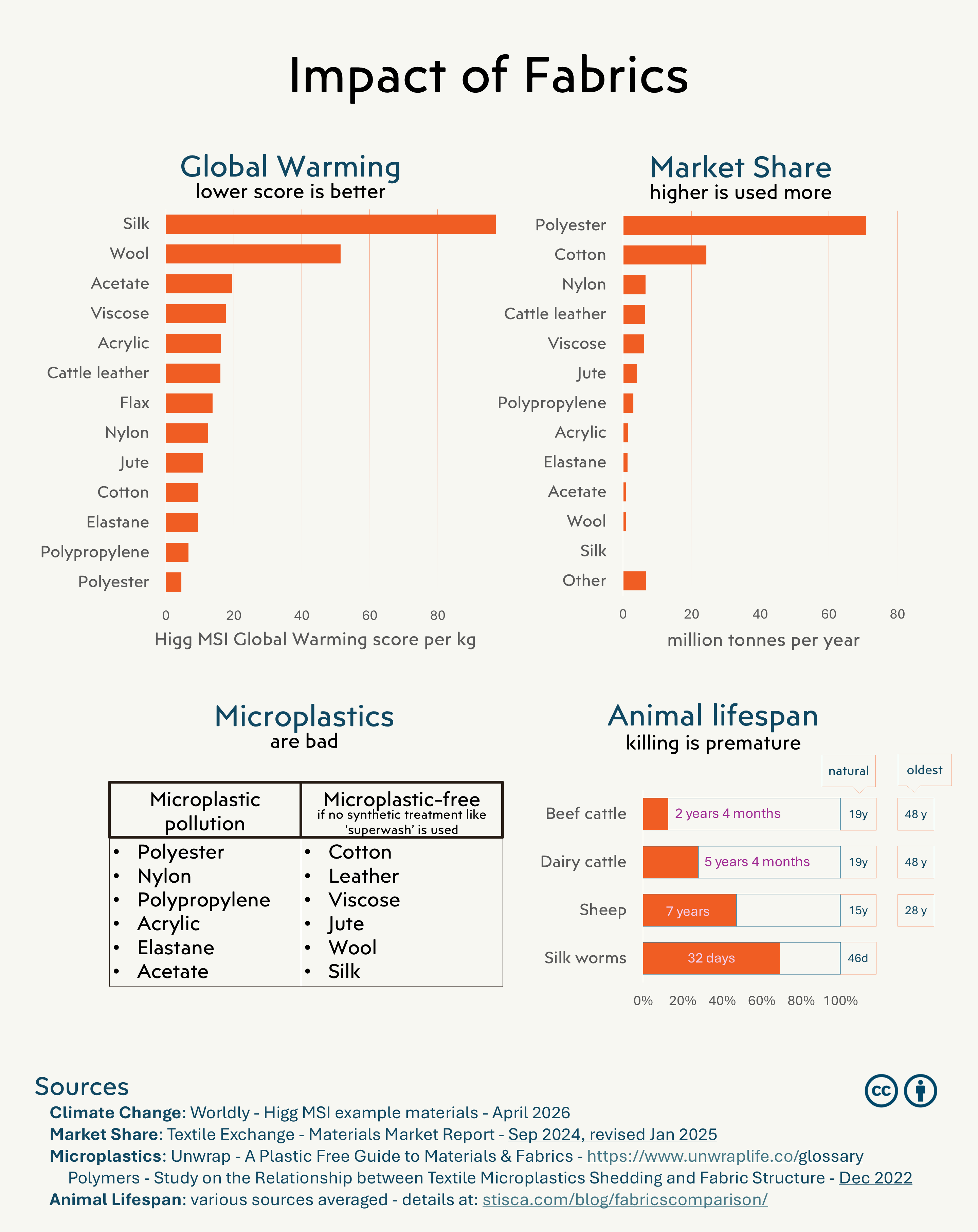
The Higg MSI scores for global warming are taken from their sample fabrics and materials. These represent default materials for the different fabrics. The score does not relate to a specific real-world metric, instead it is used to compare different materials relative to each other. A higher score indicates a higher impact per kg of each material. The detailed data that was used for this was retrieved from the Wordly Platform.[1]
Market share
The global market share of each fabric and material was extracted from the Textile Exchange Materials Market Report in 2024, which reports on data from 2023.[2]
Microplastics
The shedding of microplastics is reported in many different places for specific materials. Instead of a single reliable overview with the relevant, a couple where used (see the Fabrics Data file). This limits the ability to rank different fabrics from low to high shedding of microplastics, so this only depicts if microplastics are shed. Natural fibres do no by default shed microplastics. While these do shed micro fibres, these decompose relatively fast in the environment. However, fabrics that normally shed no microplastics can do so after being treated synthetically. E.g. superwash wool does have the potential to shed microplastics.
Animal Lifespan
For finding the natural lifespan and typical slaughter age of the different animals used for fabrics and leather, a number of sources where picked for each.Averages of those were used in the graph. See the Fabrics Data for details and specific sources.